
The body of work behind the diagnostic, and the question that started all of it.
Why do organisations spend so much developing their people, and see so little actually change?
We have spent nine years sitting with that question. In rooms, with real people, watching what happens when the pressure is on, when relationships get difficult, when values get tested. And the same thing kept showing up. The problem was never that people did not know what to do. The problem was the distance between what they knew and what they actually did when it mattered.
We call that distance the Translation Gap. Closing it became our life’s work.
SKA is the Anchor Organisation Lead for the EASEL Lab at Harvard University, one of the world’s leading centres for social and emotional learning research.
Our work there asks a hard question. When a competency framework built in one part of the world is brought into another, what survives the journey, and what disappears?
The answer we keep arriving at is uncomfortable. The things that matter most are often the first to get lost. The local meaning, the cultural weight, the way a behaviour actually shows up in a Pakistani office rather than an American one. Most tools never notice what went missing. Ours is built to find it.
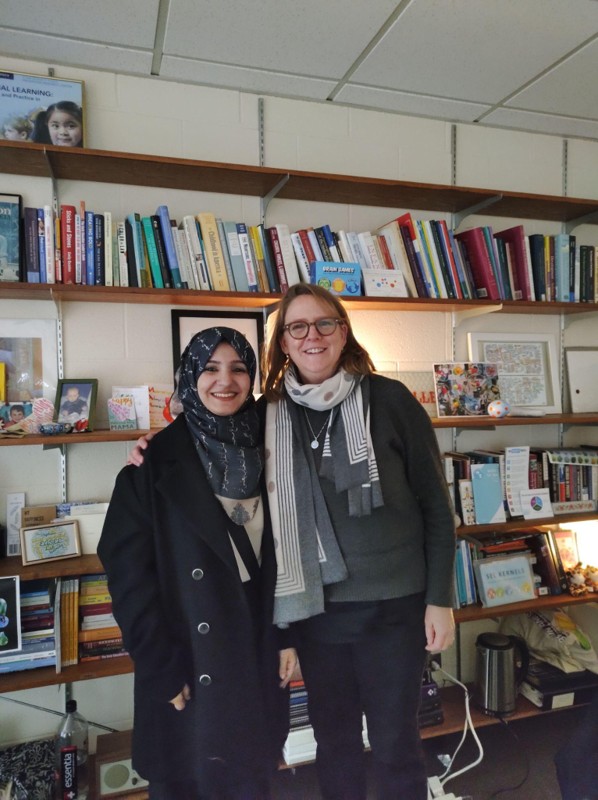
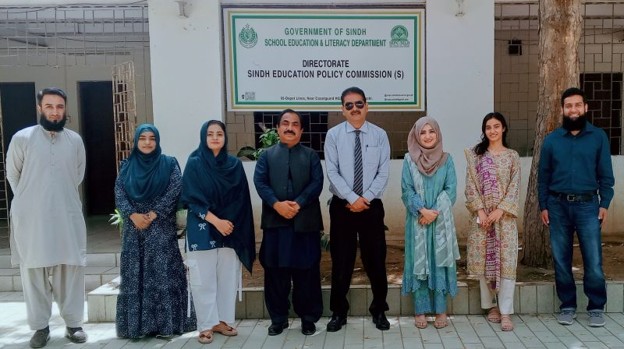
The deeper the work went, the further it travelled. What began as a question about people development became a conversation about the workforce. And then a conversation about policy.
We were invited to sit with the Sindh Education Policy Commission to discuss the state of social and emotional learning in Sindh, and what it means for the people who will carry this economy forward.
The same thinking that helps one team in one office also speaks to how a province prepares its people. That is the reach of this work when it is done properly.
The Thrive by Design Diagnostic did not come from a textbook. It came from nine years of watching how Pakistani professionals actually behave at work.
Every question in it, every layer, every line of the report, reflects something we saw with our own eyes in the field. Nothing was imported from somewhere else and relabelled for this market. That is what makes it different. And that is what makes it work here, where so many borrowed tools do not.
Every diagnostic we run feeds something larger.
We are building Pakistan’s first National Workforce Behavioural Intelligence Index. A benchmark that tells an organisation not just how its team is doing, but how its team compares to the wider Pakistani workforce.
Right now, that benchmark does not exist. We are building it, one organisation at a time. And every organisation that works with us becomes part of the first real picture of how Pakistani teams actually function.
Start with a conversation. We will show you where to look.
Book a conversation